
In 1972 within the ministry of labor and sports the idea of a vocational training center in Mogadishu came up, but no sponsor could be found at that time. In 1976 through the Arab Labor Organization drawings were prepared by an Algerian team for a huge vocational training institute to be built in Mogadishu.
Shortly later the government of the federal republic of Germany was approached to assist in the operation of the partly erected center.
After an evaluation mission in 1980, the German government agreed, to assist GTZ in establishing a completely new institution next to the existing workshops to be named skills development and competency assessment institute.
In 1978 some funds were allocated and four of the twelve planned workshops, as well as one admin building, were created to be used as a trade testing center.
In 1983 the project agreement between the two governments was signed and from June 1983 the project came into being. In the first instant instructor training was to be done, to qualify a number of Somali instructors to operate the center later.
From January 1984 to July 1985, building construction took place by summer 1986 the equipment was completed, training with a test group commenced from summer 1985, and regular training since summer 1986.
Since the center is a mutual project of two governments, expenditures are split as well.
The cost for building construction was carried approximately 60% by the German side and 40% by the Somali side.
The Somali government has to provide all running and operation costs for the center, including Somali personnel. The German side has provided all technical and none technical pieces of equipment, a number of German expertise, and a number of scholarships for the Somali staff.
The cooperation was based on a project agreement between the two governments, it might continue up to the early twenties.
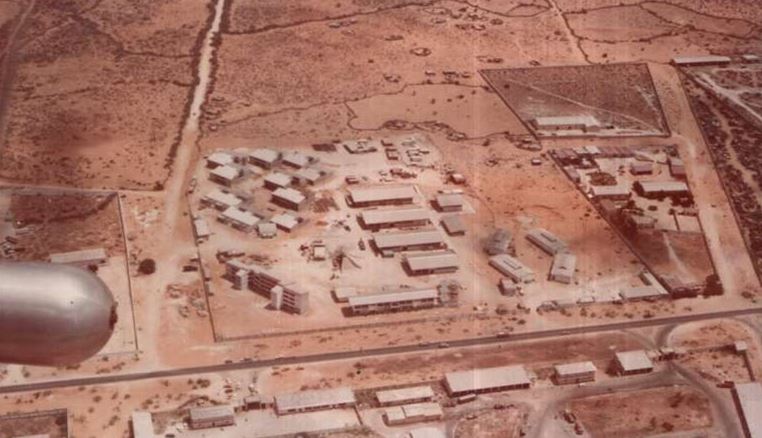
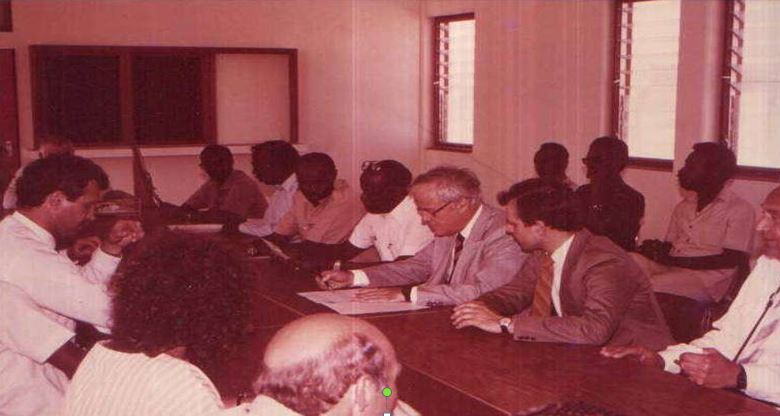
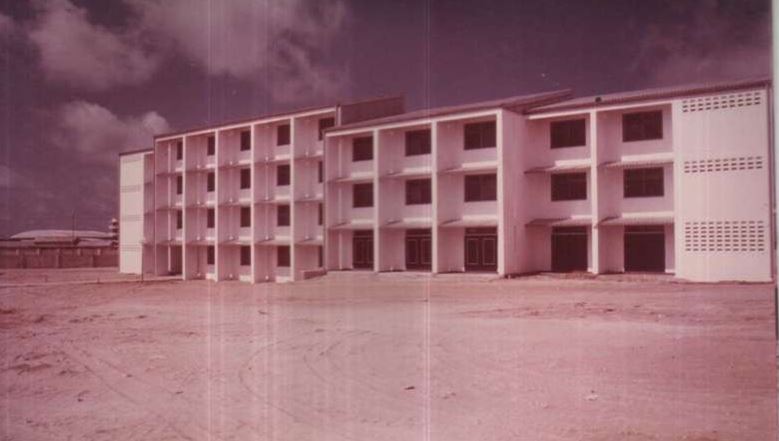
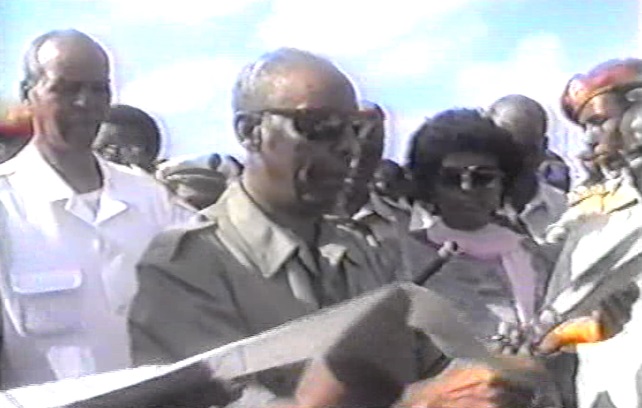
The opening of the Industrial Vocational Training Center in Mogadishu in July 1985 was an important event during the presidency of Mohamed Siad Barre in Somalia. The center was part of the government’s initiative to enhance education and skill development, particularly in technical fields. Siad Barre’s administration was focused on modernizing Somalia’s workforce to support the country’s economic growth, emphasizing the importance of vocational training for young people in sectors like construction, mechanics, and agriculture.
The ceremony symbolized the government’s commitment to building a skilled workforce, addressing unemployment, and fostering national self-reliance. This initiative was aligned with Siad Barre’s “scientific socialism” ideology, which aimed to modernize the country and strengthen its industrial and economic capabilities.
In summary, the 1985 opening of the Industrial Vocational Training Center was a key moment in Somalia’s educational and developmental efforts under Siad Barre’s leadership, marking a step toward enhancing technical skills and improving the nation’s workforce.
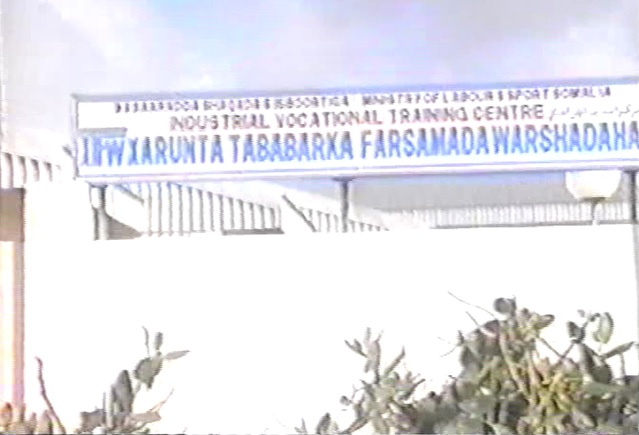
After January 1991
In the wake of the Somali government’s collapse in January 1991, the nation descended into chaos. Widespread looting and violence left many institutions in ruins, transforming them into mere remnants of their former selves. Among those was an important educational institution that, despite the turmoil, managed to survive and eventually thrive, thanks to the unwavering support of the community and international partners.
First and foremost, we express our gratitude to Allaah (God) for safeguarding this institution during such perilous times. The resilience shown by the community, elders, and the elite of society was instrumental in protecting this vital establishment. These local leaders recognized the significance of the institution not only for education but as a beacon of hope in a time of despair. They rallied families and community members to form a protective network, ensuring that the institution remained intact amidst the chaos.
Their collective efforts included organizing community watch groups, securing the premises, and advocating for the institution’s importance in rebuilding the social fabric of Somalia. This grassroots movement highlighted the community’s commitment to education and stability, ultimately safeguarding the institution from becoming a “white elephant” in Somalia.
The role of the German government, through its international cooperation agency (GIZ), cannot be overstated. GIZ provided crucial financial support that enabled the institution to maintain its day-to-day operations and continue offering training courses. This partnership allowed the institution to provide education and vocational training to countless individuals, fostering resilience and hope in the community. Without GIZ’s assistance, many of the achievements made during this tumultuous period would have been unattainable.
In conclusion, the survival of this institution amidst the collapse of the Somali government is a testament to the power of community solidarity and international cooperation. The commitment of local leaders, families, and the support from GIZ highlight the collective effort required to preserve and nurture vital institutions in times of crisis. As Somalia continues to heal, the story of this institution remains a beacon of hope for a brighter future, underscoring the importance of education and community resilience.
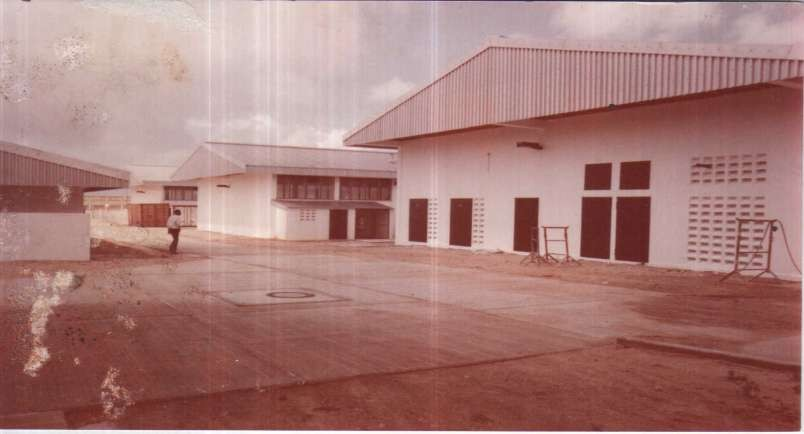
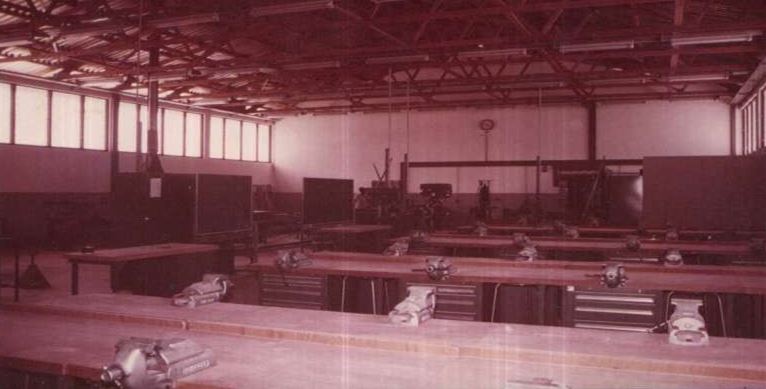
From its inception in early 1993, the institute operated as a beacon of hope and education, dedicated to empowering individuals through a variety of training courses. Over the years, it established a reputation for excellence, offering programs that catered to a diverse range of skills and professions.
As the years progressed, the institute flourished, attracting trainees from various backgrounds. Each course was meticulously designed to provide practical knowledge and hands-on experience, enabling students to thrive in their chosen fields. The commitment to education created a vibrant learning environment, fostering collaboration and innovation among instructors and students alike.
However, this period of growth and development came to a tragic halt in October 2009. The Al-Shabaab terrorist group launched a violent takeover of the institute, forcing everyone—administrators, instructors, security staff, and trainees—to flee for their lives. The once-bustling halls of the institute became a scene of chaos and fear as individuals sought safety from the impending threat.
In the aftermath of the takeover, Al-Shabaab looted the institute, stripping it of its valuable resources. Machinery, training tools, and equipment worth an estimated $8 million were stolen, leaving the institute in ruins. The loss was not just financial; it represented a significant setback for the community that had relied on the institute for vocational training and skills development.
The impact of this devastation was felt far and wide. Students who had invested their hopes and dreams in their education were left in limbo, while instructors found themselves without a place to share their knowledge. The sense of community that had flourished within the institute was shattered, as individuals sought refuge in safer areas of the country.
Despite the hardships faced during this tumultuous period, the spirit of resilience remained strong within those affected. Many individuals continued to advocate for the importance of education and the need to rebuild what had been lost. The story of the institute serves as a poignant reminder of the fragility of progress in the face of violence and the enduring strength of the human spirit in the pursuit of knowledge and safety.
In October 2009, the extremist linked to the Terrorist organization of Al-Qaida (AL-SHABAB) Took over the skill training compound.
For this forced each and everybody living there and around to flee and turned into a military compound.
Alshabab looted every item in the center including machinery, generators, spare parts, library and reference books, lathes, and all other equipment, which was worth millions of dollars
Al-Shabaab gunmen ransacked the institute in late 2009 and stole all the machinery and equipment, which was worth millions of dollars. Additionally, the institute’s facilities and infrastructure sustained significant damage as a result of the conflict between AMISOM and al-Shabaab, which lasted through the end of 2011
Since early 2012 The Ministry of Labor and Social Affairs attempted to obtain a budget from the government for the institute and reached out to several overseas donors and their organizations, but no funding was located.
Then, with the assistance of other scholars, the management and other seniors of the institution who had defended it since January 1991 stepped up to restore and equip it as much as possible, which led us to borrow a significant amount of money from Dahabshiil Bank and Salaam Bank in Mogadishu.
The German-built institute compound occupies 14,990 m2 of land consisting of a built area and some free space. There is an old VTC compound which is older than the German-built institute, located in an adjacent compound presently occupied by a private businessman and partly used as a Police Station by the government for the community in the surrounding areas.
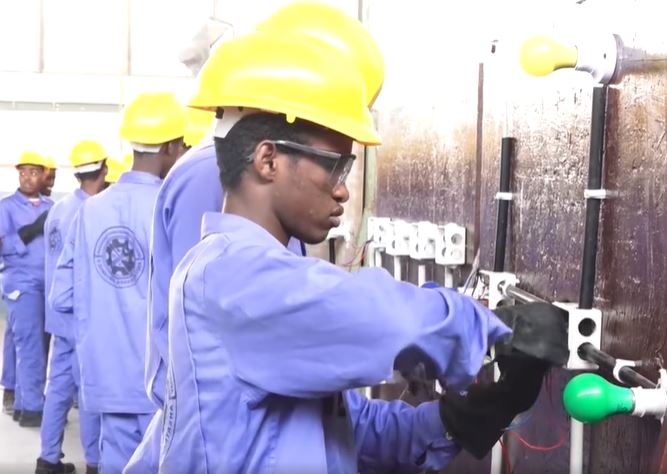
We have repaired some parts, including the electrical training department, the welding and plumbing department, the toilets, the administrative offices, and the theory classes, despite the fact that the institution is very large and we lack the financial resources to do so. We have also swept the campus of any trash that had accumulated there.
This has made it possible for us to start up 55 students studying solar energy (renewable energy), for the first time in 13 years.
For students who wish to learn plumbing, welding, carpentry, Bricklayer/house construction, and tailoring, we prepared all essential machines and tools; however, those materials are currently being stored in a warehouse.
For further details please see attached pictures.
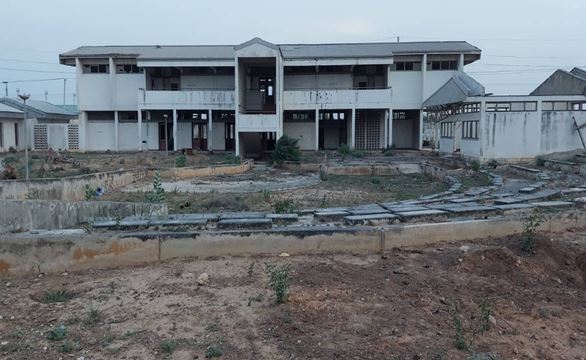
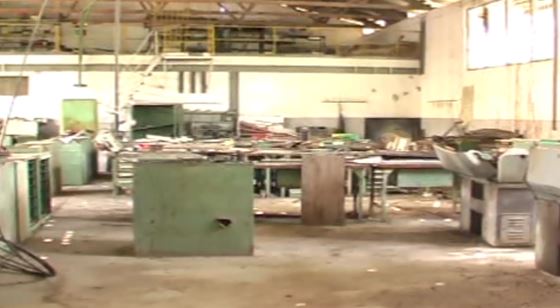
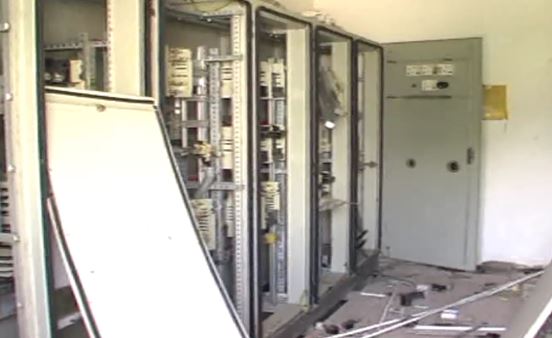
The Ministry of Labor and Social Affairs attempted to obtain a budget from the government for the institute and reached out to several overseas donors and their organizations, but no funding was located.
The administration had initially struggled to secure funding from the government or overseas donors. This led the institute’s admin team to borrow significant amounts of money from Dahabshiil Bank and Salaam Bank to restore and equip the institute.
Efforts were made to repair limited areas and clean the campus, creating a more conducive environment for training. As a result, in early 2020, the center successfully started training 55 individuals in renewable energy for the first time in several years. The institute has continued to offer skill training to youth, including vulnerable groups such as low-income families, internally displaced persons (IDPs), and individuals with special needs.
it continues to operate partially and remains committed to providing essential vocational training to the community.
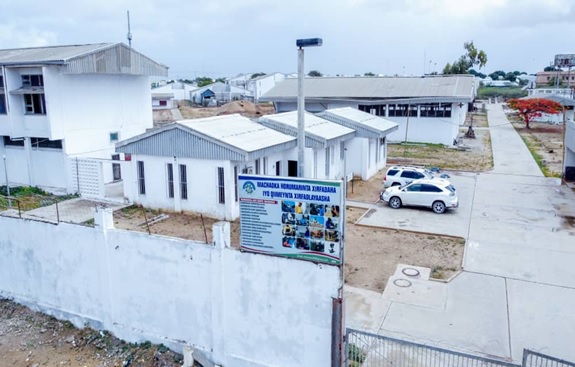
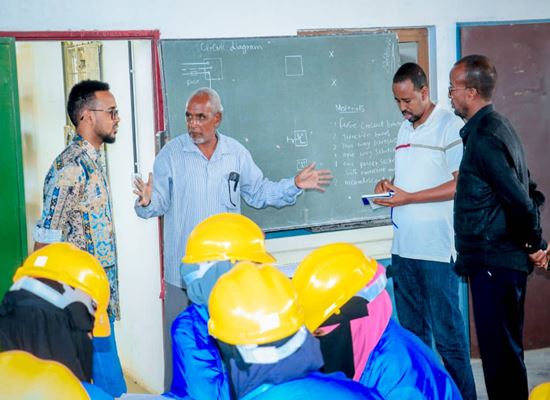
The Ministry of Labor and Social Affairs attempted to obtain a budget from the government for the institute and reached out to several overseas donors and their organizations, but no funding was located.
The administration had initially struggled to secure funding from the government or overseas donors. This led the institute’s admin team to borrow significant amounts of money from Dahabshiil Bank and Salaam Bank to restore and equip the institute.
Efforts were made to repair limited areas and clean the campus, creating a more conducive environment for training. As a result, in early 2020, the center successfully started training 55 individuals in renewable energy for the first time in several years. The institute has continued to offer skill training to youth, including vulnerable groups such as low-income families, internally displaced persons (IDPs), and individuals with special needs.
it continues to operate partially and remains committed to providing essential vocational training to the community.
© Copy right 2024 National Institute of Skills Development and Vocational Training (NISDVT) Developed by: MoLSA ICT
